B Reactor Museum AssociationAuthor: Michele S. Gerber, Ph.D., Facility Operations Division, Westinghouse Hanford Company, April 22, 1993 (approved for public release May 19, 1993)
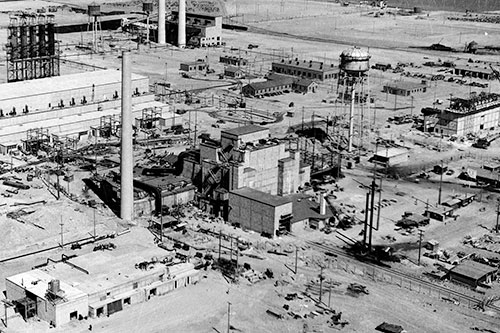
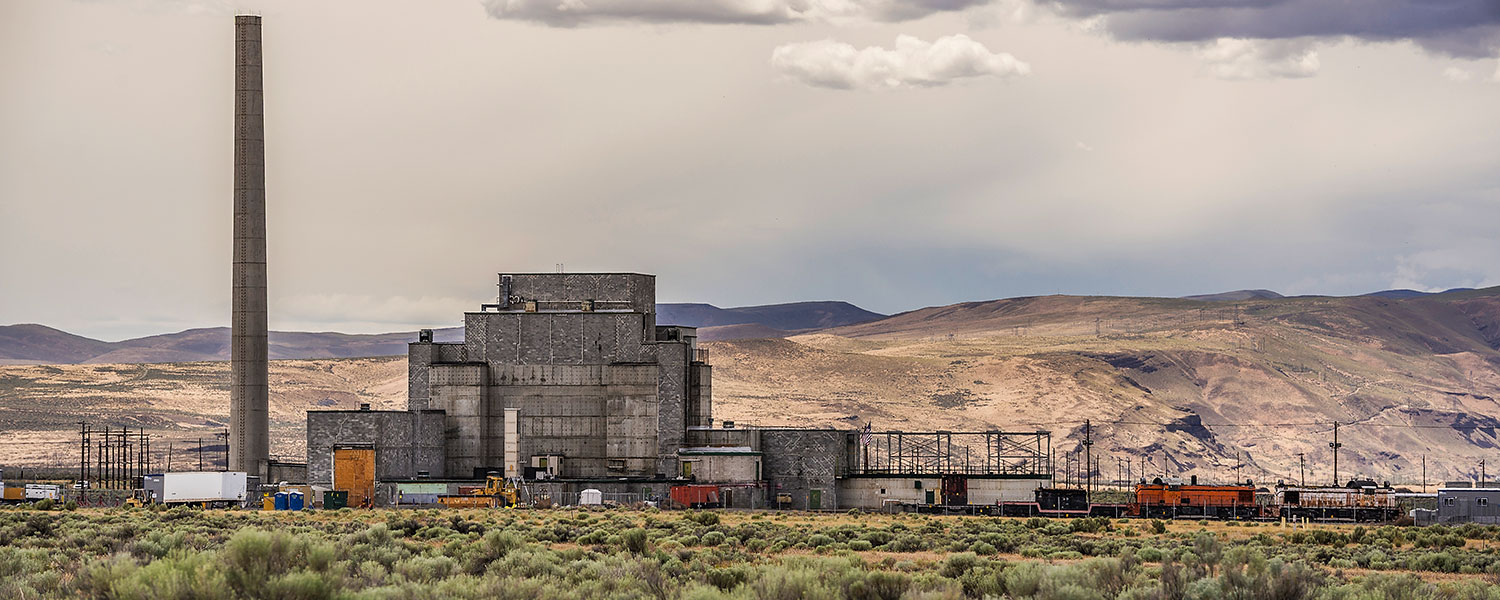
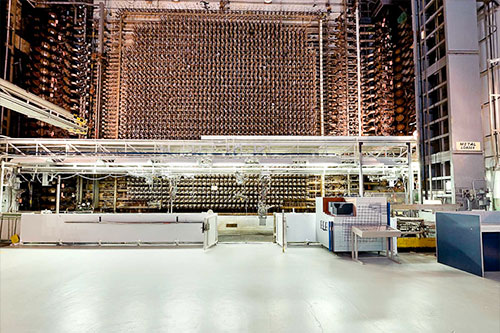
100-B Area was staked for excavation in March 1943, and ground was broken for the first structure in the area, the 107-B Retention Basin, in August 1943. Construction of the reactor building itself began in October 1943. The first attempt to energize B-Reactor occurred on September 26, 1944. At that time, 901 of the reactor's 2,004 tubes were loaded with uranium (U) charges. Loss of the initial reactivity, leading to complete shutdown, occurred the following day. Gradually, over the ensuing three months, larger and larger numbers of B-Reactor's tubes were charged with U, as scientists learned that greater amounts of reactivity were needed to overcome the neutron-absorbing effects of xenon-133, a product of the fission reaction. By December 20, 1944, 2,002 of the 2,004 process tubes in B-Reactor were loaded with U charges, and sustained operations (except for occasional instrument scrams and scheduled maintenance outages) took place through March 16, 1946. The reactor first achieved its full, nameplate design operating power level of 250 megawatts (MW) in February 1945.
The charging of B Reactor was accomplished with a lever-type charging ("C") machine, attached to the 6,000-pound capacity, 8-10 feet wide, "C" elevator at the reactor's front face. As part of the charging operation, each process tube was lubricated with a 50-50 mixture of A-60 Calol* soluble oil and water. About 5.8 gallons of oil was used per tube, and was then drained out the discharge nozzles and caught in a trough that carried it to the process sewer. Pile operators did not want this oil to fall into the rear fuel storage basin, where it would cloud the water and become activated. Even before the December 1944, full-tube charging of B-Reactor, however, the "pile" (reactor) was able to achieve goal exposure of some of the U located in its central zones. The first "push" (discharge) of irradiated metal occurred on November 24, 1944, and the next push occurred on December 26-27.
In both cases, an "aiming tube" or "tipoff" (a removable extension at the rear of the process tube) was attached, to assure the "guided fall" of irradiated fuel elements ("slugs") first onto a neoprene mattress and then into the fuel storage basin. The aiming tube was used because early pile designers believed that a "free fall" descent into the water-filled storage basin would damage the slugs. However, "D" operations, because they involved freshly irradiated fuel elements, posed the greatest potential radiation exposure danger of any routine reactor functions. Consequently, fears arose when some of the slugs "hung up" in the tipoffs during the earliest "D" procedures. In January 1945, the decision was made to remove the special equipment and resort to a free-fall method of discharge. At that time, the lever charging machines were replaced with pneumatic-powered charging machines, because with the old equipment, there was no way to regulate the applied force. Using that type of apparatus with free-fall discharge was dangerous because irradiated slugs could be propelled so far out the back of the reactor that they would fly over the water basin and land on the catwalks. After the pneumatic "C" machines were placed in use, a larger, wider discharge chute attached to the pile's rear face during "D" operations, in order to assure that the free falling slugs would clear the pigtails. Submerged chain nets, known by Hanford workers as trampolines, also were placed in the fuel storage basins to absorb the impacts of free falling fuel elements. Even when B-Reactor operations slowed at the close of World War II, and went to a 40-hour per man work week in September 1945, the work week was organized around four, 8-hour shifts per 24 hours. This schedule was adopted to allow for double-shift coverage during "D" operations.
At discharge, irradiated slugs fell into B-Reactor's 81-foot by 68-foot fuel storage basin. Filled with 20 feet of water, the basin was served by submerged buckets that were suspended from a monorail via 25-foot yokes. Long rakes and tongs were used to load each bucket with one-half ton of fuel elements. Viewing of the discharge area was accomplished with two main periscopes, located on the ceiling of the discharge area and on the wall opposite the rear face of the pile. Additionally, the latter location contained a "Fly-eye" viewer that consisted of four wide-angle lenses. A shielded cab, which could be attached to the 50,000-pound, 8-10 feet wide "D" elevator, also had its own periscope. One last periscope was located in the labyrinth that led to the discharge area balconies, but its view often was blocked by the "D" elevator (which had to be raised to the top of the reactor's rear face during discharge operations). Thermocouples were placed at the inlet and outlet of the storage basin, and water temperature levels as indicators of radiation intensity were monitored carefully. After a very short period (several hours to one day) in the 100-B fuel storage basin, irradiated fuel rods were loaded into shielded rail cask cars and taken to the 200-North Area for storage in the 212 Lag Storage Buildings. Within any one of these three buildings, the rods ("lags") were stored for periods of time ranging from a few weeks up to perhaps as long as 50 days, to allow for isotope decay, before they were taken to either T-Plant or B-Plant for chemical separation.
As B-Reactor neared completion, various areas were posted with signs reading "Danger Zone - Keep Out," as open display of the words radiation or radioactivity was forbidden by HEW policy. Red signs indicated the most severe level of danger, and signs of this color were placed around the entire rear face (discharge, or "D") area, the downcomer room, the inner rod room, and at the top of the reactor (the VSR entry points, and the winch level or work area that serviced the top of the reactor). Yellow signs, indicating areas of less severe (although still serious) danger were posted around the front work area, the "C" elevator, the exhaust fan seals, the water sample rooms, the fuel storage and transfer areas, the apparatus room, the entire top of the reactor, the outer and inner gas sample rooms, and the "D" elevator machinery room.
No incidents of overexposure to radiation occurred in these areas during the first 18 months of B-Reactor operations. Indeed, only one incident occurred during that period that required a Special Hazards Investigation by the radiation monitoring group (known as the Health Instruments - H.I. - Division). This event occurred during shutdown maintenance on control rods, when an activated rod inadvertently was serviced. Radiation exposure to personnel was limited to one rad (R), but HEW personnel commented that "the incident served to crystallize the need for very rigid control by the Special Work Permit (SWP) system."
Outside of 100-B's "exclusion area" (the area covered by the reactor building itself and immediately adjacent buildings such as 115-B and 110-B), and the effluent basin and solid waste burial grounds, very little radioactive contamination was spread. Surveys conducted during the early years occasionally discovered contamination on equipment, tools, tool boxes, and gas cylinders in the 1717-B Maintenance and Electrical Shop, the 1722-B Area Shop, and the 1734-B Maintenance Shop. Sporadic contamination also was found on laboratory sample holders, the sample vault and process hoods in the 1704-B Administration Building and in the 190-B Building, where the water process control laboratories were located (see Section 2.13). Additionally, spotty contamination was measured in the 1707-B Change House showers, the 1713-B Storage Buildings, and the 1719-B First Aid Station. Burning grounds, used for the open air incineration of ordinary trash, as well as roads in the 100-B Area also displayed occasional and spotty contamination.
The operations of B-Reactor pioneered virtually every technique of reactor operations. Consequently, changes occurred in many aspects other than discharge operations. For example, B-Reactor originally was constructed with a 0.240 inch orifice in the inlet nozzle of every process tube. However, by the time operators realized that they would need a full-tube loading to maintain reactivity, they also had learned that higher neutron flux levels, requiring greater cooling capacity, would exist in the center of the pile. Therefore, in late 1944, about half (998) of B-Reactor's inlet nozzles were re-orificed. A concentric circle of 428 tubes around the central zone was retrofitted with 0.175 inch orifices, and the outermost ring of 570 tubes was retrofitted 0.140 inch orifices. With this configuration the water flow was adjusted to give an inlet nozzle pressure of 350 pounds per square inch (psi), thus providing the desired supply of approximately 20 gallons per minute (gpm) per reactive tube. The temperature of the exit cooling water was held at 65°C, as HEW scientists believed that excessive process tube and fuel element corrosion would occur above this level.
By early December 1944, HEW operators had measured a 10 psi increase in pressure drop as cooling water moved through the process tubes of 105-B from the inlets to the outlets. This phenomenon indicated that, as anticipated, impurities in the process water had built up a film on the tube surfaces. Site scientists knew that film accumulation would decrease the process water's ability to contact and cool the fuel elements, causing heat build-up within the reactor. Consequently, they undertook B-Reactor's first purge (cleansing operation) on December 12. A second, follow-up purge occurred on December 20. Each purge lasted about one hour, with oxalic acid containing a small percentage of peroxide, used as the cleansing agent. However, operators reported that "no appreciable improvement was measured," and that a calcium oxalate film had formed on the tubes. On January 26, 1945, they undertook a purge using a 100 parts per million (ppm) concentration of Super-Cel,* a diatomaceous earth slurry, in the process water feed. (This concentration amounted to about 3% of the total liquid/slurry feed entering the reactor.) After a one-hour application of Super-Cel, HEW operators measured a 23 psi decrease in pressure drop across the tubes of 105-B. They were so pleased with these results that they adopted the Super-Cel "method and procedure as standard...in all...100 Areas." From that time forward, throughout the 1940's, each operating Hanford reactor was purged with Super-Cel about once a month. The one disadvantage of Super-Cel, the fact that it plugged the 48-mesh screens in the crossheader strainers, was overcome by replacing the screens with 30-mesh.
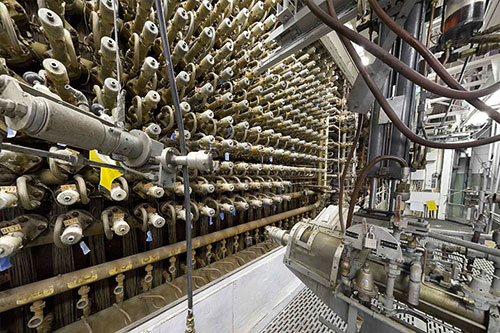
The lattice of B-Reactor was configured so that the process tubes lay in 46 horizontal rows, with each tube 8 and 3/8 inches apart. The tubes themselves were made of "2-S" aluminum (Al), a very pure, soft Al, and were clad in "72-S" Al, an alloy containing 1% zinc. Each tube was 55-57 mils thick, and was "ribbed" on the inner bottom with projections designed to hold the fuel elements in place and to allow cooling water to flow freely around them. In World War II operations, each tube held 32 active, eight-inch U charges, with various types of aluminum "dummies" (model slugs) spaced both "upstream" and "downstream" of these charges. Open eight-inch lengths of Al or stainless steel punctured by several holes were called perforated or "perfs." They were placed directly upstream and downstream of the active charges, and their purpose was to scatter and absorb enough gamma rays and neutrons to protect the reactor's biological shields, but not to absorb so much energy as to poison (tamp down) the fission reaction. The perfs also provided water mixing to enhance heat transfer out of the active charges. Soon, HEW operations learned that stainless steel absorbed too many neutrons, and they began to use Al perfs exclusively. Aluminum-jacketed lengths of solid lead-cadmium, usually six inches long, were placed in the far ends of each process tube, in order to scatter and absorb the neutron stream. These latter slugs were called "shielding dummies." HEW workers soon developed other nicknames for the dummies, including "spacers" (both perfs and solid dummies), "expendables" (those placed closest to the U charges, and hence the ones that became most radioactive), and "non-expendables" (those whose radioactivity levels were low enough that recovery and re-use was possible). In practice, in the years before 1950, none of the lead-cadmium dummies were re-used, and all were disposed in 100-B solid waste burial grounds. About half of the perfs were re-used immediately, another one-fourth needed about four months of decay time before re-use, and the last one-fourth needed a year's decay time before re-use.
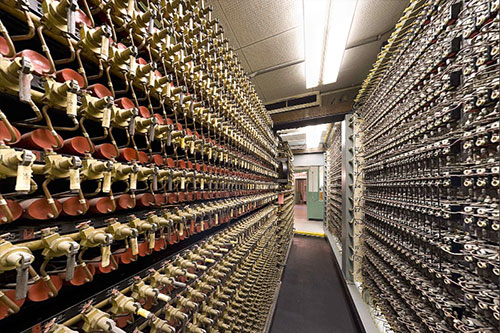
Many questions about reactor operations puzzled and intrigued the early operators of B-Reactor. For example, they worried about the possibility of "slug failures," or the accidental penetration of a U fuel element's Al jacket by water. They knew that such penetration would cause the U to swell, thus blocking the coolant flow within the process tube and melting the fuel elements in that tube. Also, fuel ruptures would allow the escape of radioactive fission products in large amounts. To detect fuel failures, they installed eight beta-sensitive ionization chambers at the rear face of the reactor. Active (exit) water from both ends of the discharge crossheaders was passed through a one-eighth-inch annulus into a chamber, half of each crossheader at a time, via a solenoid valve operated on a timed electrical cycle. Water from each rear riser also was piped through ionization chambers located in the two lowest sample rooms. With water from each end of each of the 39 crossheaders being sampled, plus the two riser samples, there were a total of 80 effluent sample points in B-Reactor itself. A slug jacket failure, pile scientists surmised, would raise the activity level in the exit water by factors ranging from 20% above normal to 10 times normal (depending on the severity of the rupture). However, the activity burst might last only a few minutes, so continuous watching and recording of data was needed.
No slug failures occurred at HEW during World War II. However, by December 1945, 125 slugs with mysterious "blisters" had been identified by visual examination in the fuel storage basins of the three reactors. Using underwater tongs, personnel of the Water, Corrosion, and Engineering Group within the Production ("P") Department laboratories tried to strip off the jackets, and examine two such slugs. However, the task was too unwieldy. They developed a pneumatic "underwater cutting wheel" (lathe) for this task, and in the spring of 1946, proceeded to examine a few of the 400 (by then) blistered slugs that had been observed. On one occasion in May, they cut into the irradiated U metal and contaminated the 105-B storage basin. By that time, the reactor was shutdown (see Section 2.15), so they partially drained the basin and undertook sporadic decontamination efforts over the next several months.
Although no slug failures occurred at HEW, six slugs did warp and swell so badly that they stuck in the reactor tubes in early 1946, necessitating removal and replacement of the tubes. The first procedure tried in removal of such slugs was to flush out the charges located downstream of the stuck charge, and then to remove the upstream charges using vacuum suction. The upstream charges then were immediately loaded into an adjacent process tube that had been emptied. A rotary reamer then was used to bore out the tube ribs downstream of the stuck charge, and the problem element was pushed downstream with a hydraulic ram. (Sometimes forces up to many thousands of pounds would be needed for the latter step.) When the slug entered the de-ribbed area, its discharge was completed via pressure from the pneumatic charging machine (which also sometimes required force up to several thousand pounds). After stuck slugs were removed, the damaged process tubes were split with a special tube splitter developed at HEW, and then pulled out and chopped into lengths ranging from of a few inches up to 21 inches, with a unique HEW instrument known as the "guillotine." The longer tube lengths were buried, but two- to four-inch sections were taken to the 111-B Building for examination in water-filled steel tanks. During the same period, reactor scientists were investigating corrosion on slugs, and in tubes and in the aluminum liners ("thimbles") of the pile's VSRs and HCRs. As a result of these investigations, B-Reactor was shut down from December 11-25, 1945, for the replacement of ten VSR thimbles. At that time, site physicists considered replacing the Al thimbles with stainless steel, but their calculations showed that the greater neutron absorption profile of stainless steel would result in unacceptably large reactivity losses within the pile.
Operators of B-Reactor, from periods both early and late in pile history, believed that startup operations were the most risky from a nuclear physics point of view. Startup procedures involved a large number of manipulations and changes in HCR positions, sometimes performed very quickly, in order to maintain optimum temperature distribution with the reactor. Rod shifts accomplished too quickly could cause "hot spots" (localized areas of very high temperature and activity) in the pile, that could damage parts of the pile, cause automatic shutdowns (shutdowns triggered by instrumentation, also known as "instrument scrams"), or even rupture or melt small clusters of fuel rods. For this reason, all startup operations were performed by the chief supervisor, a senior engineer. During the first two months of operation of B-Reactor, as operators were charging more and more process tubes with fuel, and learning about the quirks of flux distribution during startups, 48 unit scrams occurred in the pile. In the following seven months, as knowledge grew, another 48 such scrams occurred, nearly all ascribed to localized power surges that "tripped" the Panellit gauges (i.e., fluctuated above standard operational settings).
Another topic that intrigued the early operators of B-Reactor was that of temperature and neutron flux distribution. At first a uniform "poison" (neutron absorption) pattern was used throughout the lattice. This method of operation produced a flux pattern that resembled a cosine curve, front to rear within the pile. Such a curve meant that while U charges in the center of the pile achieved maximum or optimum irradiation, many of the full elements located in the rest of the reactor achieved sub-optimal irradiation, due to lower neutron flux. This situation not only was inefficient in terms of utilization of the U supply, it also contributed to the severe temperature gradients that were causing worrisome expansion in the graphite in the central portions of the pile (see Section 2.14).
Shortly after the close of World War II, when more time was available for such studies, HEW operators tested several new poison patterns in B-Reactor. The flux distribution in this first pile, they commented, had been "imbalanced, notably to the right, for a large fraction of its period of operation." Their goal was to "flatten" the pronounced cosine curve, thus evening out the distribution of neutrons or "flattening" the area of maximum flux and temperature to include larger regions of the pile. Quickly, they learned that many variations in poison distribution (control rod positions) were possible to achieve higher and lower temperatures and exposures in specific reactor tubes and zones. They dubbed all of these manipulations "dimpling" the reactor. Another method of redistributing flux by using fewer fuel elements in the process tubes in the central zones was called "bowing" the pile. "Thinning" the pile was achieved by using slugs with heavier jackets and U charges with smaller diameters in the central zones, but this procedure did not work well in overall practice. In early 1946, still exploring ways to vary the poison uniformity and effectiveness within the pile, HEW physicists tested "myrnalloy" (thorium) slugs as potential replacements for the standard lead-cadmium poison rods. Although thorium worked well as a neutron absorber, it created other operational dilemmas and was not adopted as a widespread reactor poison at Hanford.
The operations of the effluent retention basins (107 Structures) also commanded much study and attention from the early operators of B-Reactor. The 107-B Basin, like those that were constructed later in 100-D and 100-F Areas, was a 12-million-gallon capacity, concrete structure divided into two halves (north and south). The originally activity standard set by health physicists within the H.I. section (later Division), was that basin water could not exceed 4.17 mrep/hr contact immersion dosage rate, or 1.1 x 10⁻⁴ curies per cubic centimeter (Ci/cc). To achieve this standard, a holdup time of approximately 3.5 hours in each half of the retention basin was planned (i.e., "parallel" operation, giving a total holdup time of seven hours for any given gallon of effluent). Throughout the first 18 months of B-Reactor operation, basin effluent activity hovered at about 60% to 65% of the allowable limit. HEW operators commented that "the radioactivity of the area effluent water was low, but not sufficiently negligible to allow the question to be dismissed."
In January 1946, both 107-B basins were tested, and the north side was found to be leaking at the rate of 500 gpm. In April, after the reactor had been shut down, this basin was drained and scraped free of algae and mud. The expansion joints, which originally had been caulked with mastic and cork, were re-caulked with asphalt. The basin was refilled and retested, and still appeared to be leaking at the rate of 180 gpm. Additional repairs addressed the problem in June. Also, the amount of lime (hydrated calcium oxide) added to the effluent basin was increased in order to raise the pH level of water, as it was noted that a pH below 7.0 caused the concrete to degrade. Meanwhile, the 107-B south basin was found to be leaking at the rate of only 90 gpm, and was not repaired. At the same time, concerns with effluent dilution in the river prompted HEW scientists to invent a special resistance-type thermometer mounted in a torpedo-shaped float that could be towed at high speeds. They undertook a program of cross-sectional (both vertical and horizontal) temperature measurements in the Columbia River, at various points downstream of the reactor outfalls. Their preliminary findings indicated rapid vertical mixing of pile effluent, but slow and gradual horizontal mixing.
Water influent treatment, a subject closely related to the generation of radionuclides in effluent, was another topic of intense interest to the early operators of B-Reactor. The pH of Columbia River raw water varied between 7.6 - 8.4, a level that HEW scientists feared would cause much corrosion of the Al process tubes and the aluminum-silicon jacketed fuel slugs. (Actually, the "63-S" cladding on the fuel elements also contained a small percentage of magnesium). Therefore, they added sulfuric acid to reduce the process water's pH below 7.5 for the coagulation and filtration process, and then added lime after filtration to raise the water's pH to 7.5 - 7.8 (although Process Specifications allowed the use of coolant with a pH of up to 8.2). They also added 1.8 - 2.2 parts per million (ppm) sodium dichromate (Na2Cr2O7) to inhibit the ruinous corrosion on process tubes and fuel elements. The sodium dichromate flowed into the tiny cracks and crevices of the aluminum surfaces, and acted to passivate the metal. The interaction between pH and the hexavalent chromium (Cr+6) was crucial, as the scientists believed that a pH much below 7.0 would reduce the Cr+6 to trivalent chromium (Cr+3) and lay down a heavy film on the process tubes.
It was also important to reduce the turbidity in the Columbia water, which could range up to 750 ppm during the springtime periods of high flow. Turbidity referred to the amount of suspended solids, containing debris and parent elements (especially iron and manganese) which could become activated, in the river's water. Therefore, this water was first coagulated with Ferrisul or Ferrofloc,* a standard coagulant made from chemically dissolved scrap iron and containing about 15 percent ferrous sulfate. It then was passed through filters consisting of 10 inches of anthrafilt, 20 inches of sand, and 12 inches of gravel, located in the 183-B Building. The filtration rate was 2.6 to 2.7 gallons per square foot per minute (gal/ft2/min). Chlorine to control algae and to help the coagulation process by breaking up iron and manganese organic complexes, activated carbon to keep the free chlorine level below 0.2 ppm, and sodium silicate (SiO2) to keep iron in the process water from coagulating and creating a film on the process tubes, also were part of the standard treatments used to prepare cooling water for B-Reactor during World War II. The end result, according to the HEW Process Specifications of that era, was to modify the Columbia's raw water to the following standards.
Turbidity 0-2 ppm Iron (Fe) not to exceed 0.1 ppm pH 7.5 - 8.2 (7.5 - 7.8 preferred) Total Chlorine not to exceed 2 ppm - Free chlorine component not to exceed 0.2 ppm Manganese (Mn) not to exceed 0.01 ppm Aluminum (Al) not to exceed 0.05 ppm
Water treatment chemicals were the substances consumed in the largest amounts, by far, in the 100-B Area. Annual consumption for 1945 for some essential agents was as follows:
Chlorine 288,000,000 pounds Ferric sulfate 3,600,000 pounds Sodium silicate 3,600,000 pounds Lime 960,000 pounds Sodium dichromate 300,000 pounds
The other substances consumed in large amounts were coal for the area's steam pumps and steam heating system (76,800 tons), and the sodium sulfite and tri-sodium phosphate that were used in the zeolite water softeners of the 100-B Area boilers. (Zeolite, a natural ion exchange resin composed of hydrous aluminum silicate materials, was used to remove dissolved minerals from boiler water.) Additionally, 660,000 cubic feet of helium (He) for the in-reactor gas atmosphere was consumed by B-Pile in 1945, along with 480, fifty-pound cylinders of carbon dioxide.
Other chemicals consumed in the 100-B Area were those used by the laboratory or water analysis groups. Originally, the 100-B laboratories were divided into three groups: the "General Physics" group studied factors relating to reactor operations, such as graphite expansion, contraction, and annealing (see Section 2.14); the "Physics Plant Assistance" group examined phenomena affecting reactor performance, such as temperature and flux distribution within the pile (see Section 2.10); and the "Water, Corrosion, and Engineering" group studied film formation and corrosion on process tubes and fuel elements. However, the main function of the latter group was to control process water quality through sampling. Shortly after the close of World War II, the "General Physics" and "Physics Plant Assistance" groups were combined into a "Pile Technology" group within the "P" Department. The rapidly expanding Health Instruments Division assumed management of the "Water, Corrosion, and Engineering" group, and this unit became known as the "100 Areas Water Laboratories." The chemicals consumed in greatest amounts during analyses performed by this group were hydrochloric and sulfuric acids (of various molarities), ammonium and sodium hydroxides, hydrogen peroxide, and potassium permanganate. This new 100 Areas laboratory group also took over the sampling of effluent activity in the 107 basins, and other units within the H.I. Division assumed responsibility for the radiation sampling and survey work that, during World War II, was conducted by security and patrol personnel.
Of all the operational questions and issues that were pioneered by the operation of B-Reactor, none proved more compelling nor crucial than those involving the graphite. The pile's core consisted of "nuclear" grade graphite, a mixture of superior grade petroleum coke and coal-tar pitch which had been heated to 2500°C to burn off impurities and achieve "graphitization." The builders of HEW ranked the grades of petroleum coke and pitch that they considered to be the best in the nation, and then procured the best available combinations and labelled them with color codes. According to their assessment, the best combination was petroleum coke made by the Kendall Refining Company of Bradford, Pennsylvania, and pitch made by the Chicago Corporation.* Thus, "Kendall-Chicago" or "K-C" graphite was the material of choice. In every case, they ordered the graphite manufactured in small block sizes, in order that the heating process would reach, vaporize and exhaust as many impurities as possible. The actual machining of reactor graphite was performed at HEW, in the 101-TC Building located near the old Hanford townsite. This building, although conceived as a temporary structure, actually served as the Hanford Site's graphite shop until the construction of the 2101-M Building in 1953. The graphite for all of the Hanford reactors except KE, KW, and N was machined in 101-TC.
By December 1945, expansion of the graphite in the center of B-Reactor (and in D and F Reactors - the other two HEW piles) was measured at 0.1 inch per month, with a cumulative total thus far of one inch. This swelling, along with embrittlement, was a side-effect of irradiation, as the carbon atoms in the graphite's crystal lattice realigned themselves under the stress and heat caused by neutron bombardment. Graphite expansion was causing the process tubes to bow, "binding" the carbon-steel gunbarrels too tightly to the reactor graphite, and straining the neoprene seals at the top and side corners of the reactor shields. HEW operators worried that further extension of the graphite could split these seals and cleave the Van Stone flanges. They knew that they could utilize more of the four-inch fuel elements, rather than the eight-inch, as process tubes became more bowed and harder to charge. They also estimated that the entire reactor could be re-tubed in three months, should too many process tubes become damaged by bowing. Still, excessive graphite expansion could preclude even re-tubing. Therefore, they regarded the graphite problems as the single most important factor affecting the ultimate "life" of the pile.
As a result, in early 1946, they formed a Graphite Expansion Committee, comprised of representatives of all the technical groups within the "P" Department, as well as an H.I. Department radiation protection specialist. They developed methods for measuring both vertical and horizontal displacement (bowing) within process tubes, and also fabricated a special pneumatic jack to push and pull on individual tubes with a known force, in order to measure clearance between the gunbarrels and the graphite. They also replaced some of the neoprene gas seals, and placed "alarm bells," (responsive to release of radiation) at and near the neoprene seals. In the spring of 1946, annealing experiments at HEW demonstrated that the expansion of graphite could be "reduced by heating." However, this work was so preliminary that it could not at that point, be considered conclusive nor operable on a plant-scale.
Ultimately, concern over the graphite expansion problem and its intrinsic threat to pile life led to the Army's decision on March 15, 1946, to shut down B-Reactor. It was felt that the integrity of this pile should not be subjected to further expansion stresses, in order to maintain it as a future, reliable source for producing polonium 210 (Po-210), the initiator in early atomic weapons. Polonium 210 was made in a few central channels in B-Reactor by the irradiation of bismuth target slugs (actually bismuth alloyed with a small amount of lead), known as "B" material.
The shutdown of B-Reactor began on March 16, with a gradual lowering of the power level, followed by a two-hour purge with Super-Cel. Uranium metal charges and the Bi-Pb targets all were displaced, and dummies were inserted in 269 process tubes. Ten poison columns also were inserted. All irradiated dummies being removed from the reactor were buried, and damaged tube #3671 was removed. This process channel was left empty, in order to measure bowing in the graphite. Shutdown was essentially complete by April 26, although periodic checks were made of the pile's reactivity under shutdown conditions. These checks were taken with indium foils wrapped in paper and cellulose, and then placed in a cutaway fuel element "can" (jacket). These foils were inserted into process tubes, removed after two hours, and then the induced activity proportional to the neutron flux was counted in a Geiger-Mueller (GM) tube.* In May 1946, the neoprene gas seals in B-Reactor were replaced. Experiments with varying levels of sodium silicate and sodium dichromate in process water were carried out in the 183-B chemical treatment building throughout 1946 and 1947.
In mid-1947, convinced by positive developments in the thermal annealing of graphite (see Section 3.1), the Atomic Energy Commission (AEC - successor agency to the Army Corps of Engineers as custodians of the Hanford Site) made the decision to restart B-Reactor. The first task at hand was to replace corroded Van Stone flanges at the front and rear of the process tubes. To accomplish this, it was necessary to cut off three-eighths inch from each tube. However, Hanford managers also decided to excise three-fourths inch from some of the gunbarrels, in order to remove part of the area where these carbon-steel members were binding from graphite expansion. In total, 635 flanges were replaced (318 on the front, and 317 on the rear of the process tubes), and 155 gunbarrels were shortened. This work was completed at B-Reactor in November 1947.
Other repairs undertaken in early 1948 included the replacement of three damaged process tubes, bearings on ventilation fans, seals on the floor drains (to prevent the backflow of contaminated vapors), and the binding and re-grouting of effluent pipe cracks near the 107-B basin wall. Additionally, the downcomer needed much work. The vertical baffle and several support shims had torn loose and fallen down, there were loose and damaged steel plates in the cushion chamber, a large crack in the cushion chamber at the line leading to the 107-B basin, and the six-inch tie-vent between the cushion chamber and the junction box was leaking in several places. All of the above conditions were corrected by replacement of parts, patch welding, and re-caulking. Additionally, catwalks and lights were installed to permit more complete inspection of the downcomer, and a monthly surveillance program was started. Also, a microphone connected to a continuous recorder was emplaced near the downcomer, to detect noise changes caused by air entrainment and vibration. When all of these projects were completed, discarded equipment and contaminated tools from them and from the storage area were buried.
Criticality testing for the startup of B-Reactor were begun on July 1. The 225 MW power level at which the reactor had been running when it was shut down, was reached on July 7. Nine days later, B-Pile reached the 275 MW level, 25 MW above its nameplate design, that constituted the newest current operating level for the Hanford Works (HW - the AEC's new name for the Hanford Site) reactors. No problems accompanied the startup, except for a spike in the manganese 56 (Mn-56) level in the 107-B basin. Study throughout the summer of 1948 revealed that this manganese "flash" was caused by the slough-off of film that had built up on 100-B Area pipes and pumps during the shutdown period.
Return to History of 100-B/C Reactor Operations, Table of Contents