BRMA Vision Statement for a
B Reactor Museum,
Park, and Cultural Preserve


Contents


Vision

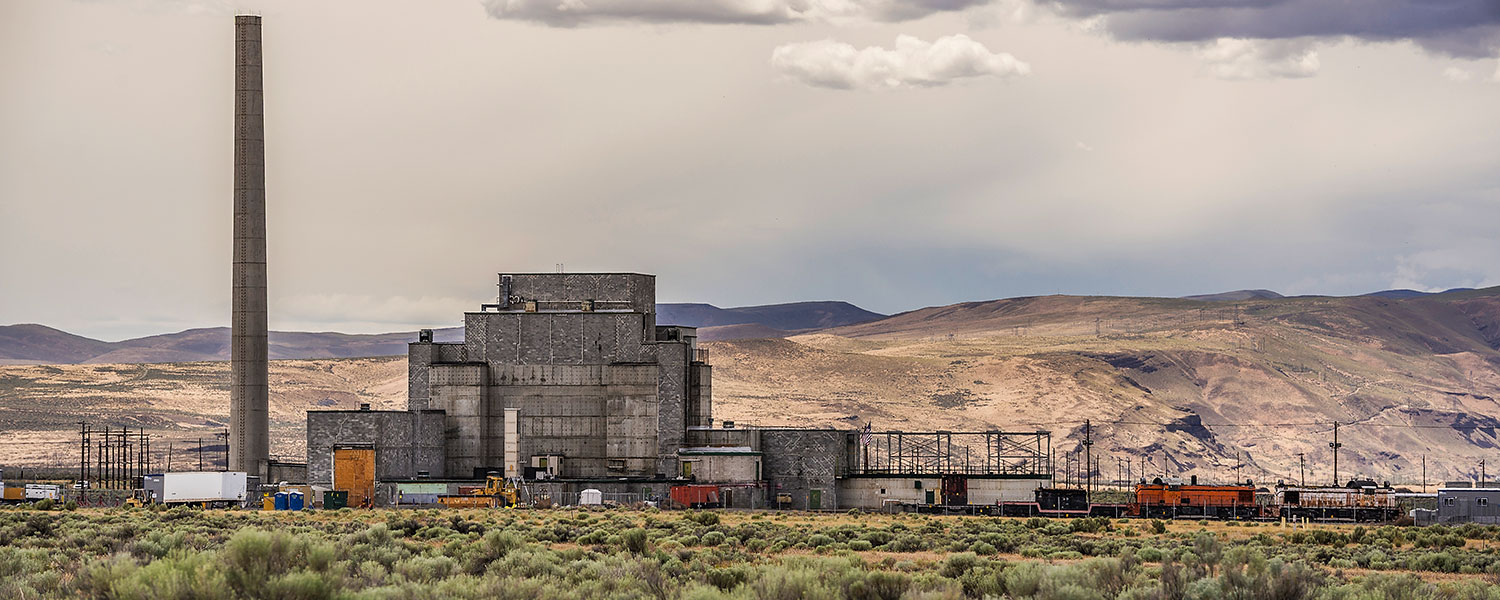
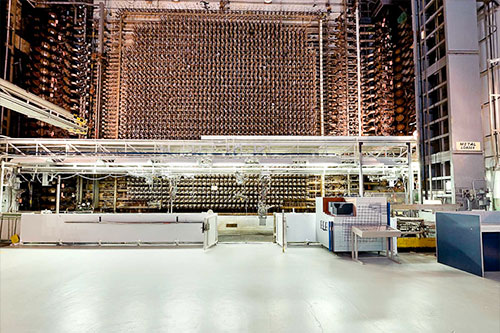
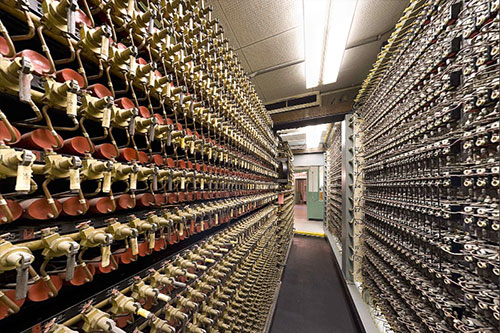
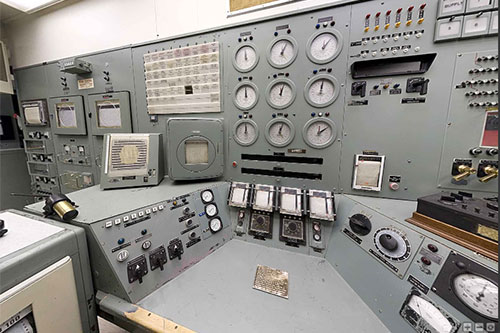
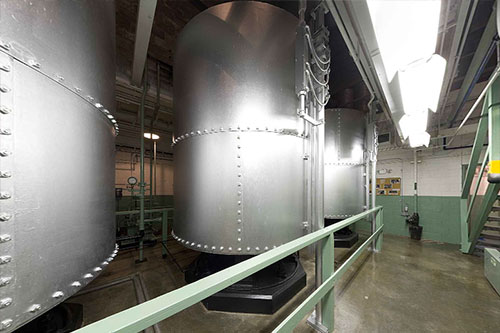
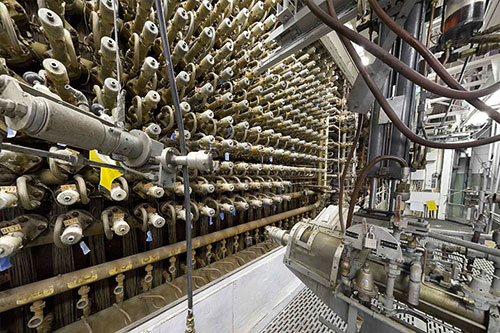
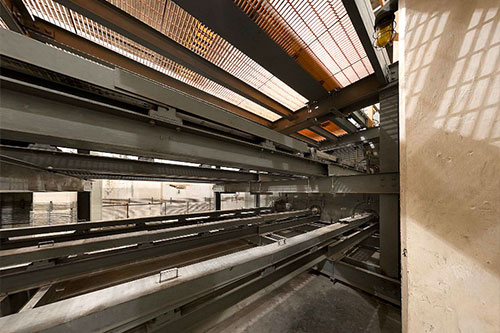
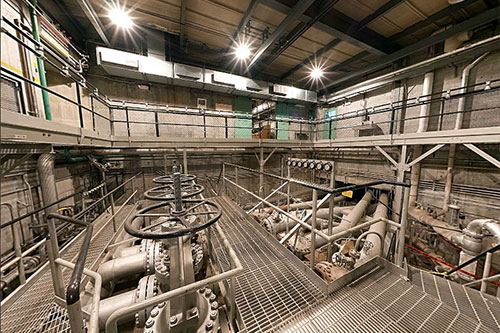
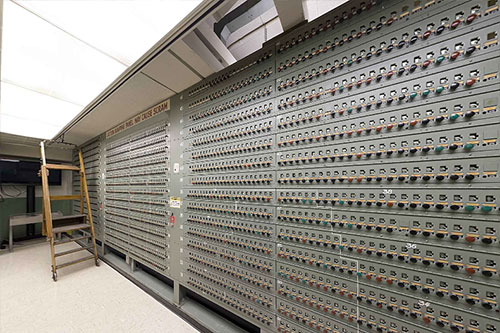
The B Reactor Museum Association (BRMA) was organized in 1991 as a non-profit corporation in Richland, Washington. Our primary mission is to preserve the world’s first industrial-scale nuclear reactor, the B Reactor at the Hanford Nuclear Site, as a public-access museum. As an historic artifact that changed the world by the production of plutonium for the Nagasaki bomb and for succeeding nuclear weapons, its significance cannot be overstated.

The vision of the BRMA is the long-term preservation and curation of the B Reactor, with public accessibility for unrestricted tours. The museum exhibits will include historic artifacts, dioramas, photographs, films, slide shows, videos, and oral histories. These displays will be primarily about B Reactor, but will also address the natural and cultural history of the Hanford Site, the Hanford Reach of the Columbia River, and the construction and development of Hanford and the Manhattan Project.

The museum will be within the 105-B reactor building itself and a nearby interpretive center, both near the east end of a proposed State park. The new park will include the south shore of the Columbia River extending from the Vernita rest area on State Highway 240 eastward to the 100-B Area—a distance of about four miles. The park area, the road providing access from Highway 240 (known as Route 6), and the museum and interpretive center will be fenced off from the adjacent restricted-access areas of the Hanford Site. Initially, visitors will travel to the museum by tour bus from Richland or by private automobile via Route 6. In the future, visitors will also be able to reach the museum from Richland by tour trains across the Hanford Site and by tour boats on the Columbia River.


Historical and Scientific Significance

When the United States entered WW II in December 1941, nuclear power was no more than a theory. Driven by the urgency of war, nuclear research rushed ahead at an unprecedented pace. In less than a year, Enrico Fermi turned theory into reality when, on December 2, 1942, in the concrete rooms and hallways under the athletic stadium at the University of Chicago, his graphite and uranium "pile" demonstrated that a nuclear chain reaction could be sustained and controlled. Soon after, the United States government began the Manhattan Project—a top secret, nationwide effort to win the race against Germany to produce the first nuclear weapons.

Within weeks of the Chicago demonstration, President Roosevelt gave his approval for the plan to produce larger versions of the Fermi reactor. Several sites were studied, but Hanford was chosen as the ideal location. The population of the villages of Richland, White Bluffs, and Hanford and their surrounding farms was small and isolated. The Columbia River provided the millions of gallons of water that would be needed to cool the reactors each day, and the Bonneville and Grand Coulee Dams supplied the electrical power the project demanded.

In March 1943, work began at Hanford. What occurred during the next eighteen months was one of the greatest scientific, engineering, and construction efforts ever attempted. Some 95,000 workers were recruited from throughout the nation to build the needed facilities.

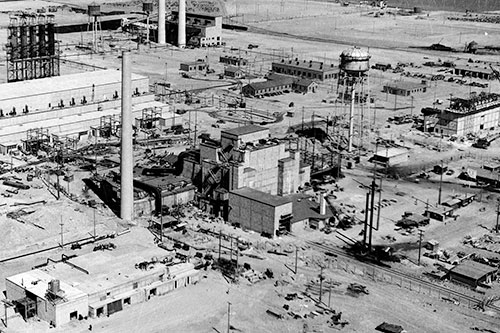
Construction of B Reactor began June 7, 1943, just six months after the Fermi demonstration. The reactor was completed and first started up on the evening of September 26, 1944. As stated by a national engineering society, "The research work, engineering, and planning required to make the reactor operate should be included in history as one of man’s most brilliant scientific and advanced engineering achievements."

B Reactor produced the plutonium for the first ever manmade nuclear explosion—the Trinity test in New Mexico on July 16, 1945. The second atomic bomb used in WW II contained plutonium produced by B Reactor. That bomb was dropped on Nagasaki on August 9, 1945, and has often been credited with bringing about the final surrender of Japan, and ending the war that stands as one of the greatest human tragedies. The history of these achievements and events must be preserved for our children and future generations.


National Recognition

B Reactor was entered into the National Register of Historic Places on April 3, 1992, by the National Park Service of the U.S. Department of Interior. The reactor was designated a National Historic Mechanical Engineering Landmark in 1976 by the American Society of Mechanical Engineers’ History and Heritage Committee. In October 1993, the American Society of Civil Engineers named the B Reactor a National Civil Engineering Landmark. In 1992, the American Nuclear Society presented the Nuclear Historic Landmark Award to the B Reactor.

Because the B Reactor has been placed on the National Register of Historic Places, the DOE must comply with the National Historic Preservation Act (16 USC 470) prior to taking any action on the historic site. For further details on the requirements, refer to the Phase I Feasibility Study Report, BHI-00076.


Administrative and Physical Status

Plutonium production at the B Reactor ended in 1968, when the reactor was shut down and decommissioned. The reactor is currently functioning as a controlled-access museum in the 100-B/C Area of the Hanford Site. It is owned and controlled by the DOE, and managed by the Bechtel Hanford Corporation, the prime contractor for Environmental Restoration at Hanford.

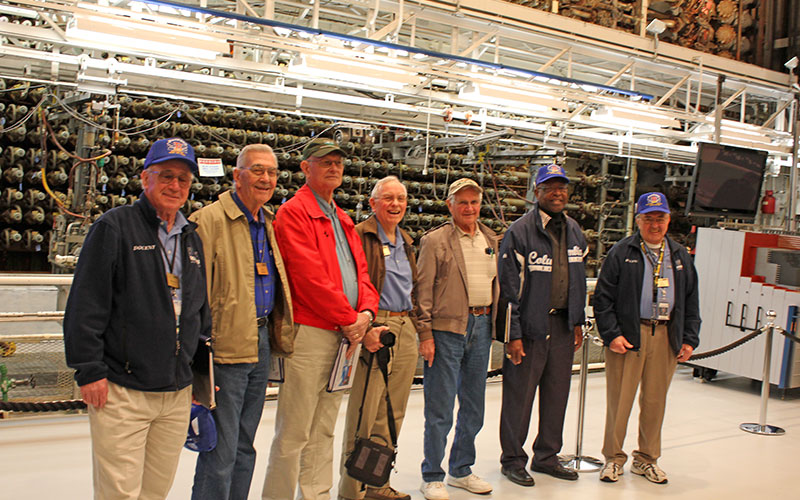
After preliminary studies of the B Reactor, the DOE recommended that the building be set aside as a museum, to be opened to the general public at a future but unspecified date. Public tours have been conducted during recent years on an infrequent, pre-planned, and scheduled basis, limited to adults cleared through Hanford security. Tours depart from downtown Richland, generally in government-provided transportation. Government personnel open the building and turn on ventilation and lights as required.

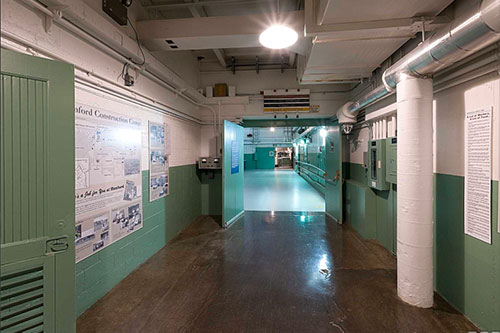
Public entry is permitted to several areas of the reactor. As safety studies are completed and their recommendations are implemented, more areas will be opened to the public.

In 1995, a report entitled 105-B Reactor Facility Museum Phase I Feasibility Study Report (BHI-00076), was prepared for the DOE, in which six alternative plans were evaluated (A through F). The report concludes that the use of the reactor as a museum is feasible. It describes several cleanup and physical improvements to the facility and surrounding area, including improvement of the access road from State Highway 240.

Alternative E describes the development of a day-use park, with river access and a cultural center. The report also recommends that a more detailed "Phase II" study be conducted that would further define the work needed and associated costs to preserve and convert the building for unrestricted public access and enhanced educational opportunities. That report is scheduled to be completed before September 2000.


Phasing in the Museum and Interpretive Center

Use of the 105-B Reactor as a museum with full public access can be accomplished with relatively minor modifications and improvements to the building. Some safety and access modifications will be necessary, including roof repairs, ventilation, fire protection, building accessibility, water quality, and barriers and signs along the tour routes. These building upgrades are described in the Phase I Feasibility Study, and will be further defined and their costs estimated in the Phase II study.

The BRMA recommends that an area of about 3,000 acres be set aside to protect the reactor and the land around it for future use as a cultural and historic preserve. Zoning of this land must be addressed early on to preserve it for future park and recreational use. Land use designation must also consider adequate buffer zones for the land around the anticipated cultural, historic, and recreational activities. One very welcome turn of events finds the B Reactor part of a proposed High-Intensity Recreation zone in the final draft of the DOE’s Hanford Comprehensive Land-Use Plan Environmental Impact Statement.

The grounds around the reactor that are currently enclosed by a chain link fence should be changed as little as possible, in order to retain the austere look that was originally dictated by a fast-moving wartime program when the reactor was built.

The museum project will likely be completed in phases as budgets permit. The BRMA envisions that volunteer help will be used as much as possible. In Phase 1, two paid staff will be required, with volunteers used for overflow crowd conditions, and a third paid staff will be needed in Phase 3. A four-phase scenario for the development follows:

Phase 1

Phase 2

Phase 3

Phase 4

The rail tour of Hanford would run between Richland and the B Reactor on one of the railroad spurs. The tour would offer Hanford history and shrub-steppe habitat presentations on a leisurely train ride to the reactor. Special dinner events have also been suggested for the tour train. This idea has been discussed with the Port of Benton and several other agencies in the Tri-Cities, and the responses have been positive.

The idea becomes even more attractive when coupled with the possibility of jet boat tours of the river. Visitors to B Reactor arriving by train would return by boat, and those arriving by boat would return by train.


Funding and Management

The entire Hanford Nuclear Site is property of the U.S. Department of Energy, which is responsible for any decisions concerning the final disposition of B Reactor. Funding to modify the facility for public use may need to come from sources outside the DOE.

The Phase I Feasibility Study shows that the cost of converting B Reactor to a museum is about one-twelfth the cost of dismantling it (the fate of Hanford’s other eight reactors). That cost ratio is based on accomplishing all of the enhancements discussed in the Feasibility Study relative to the reactor, river access, and a cultural center.

BRMA is striving to identify sources of private and non-DOE government funding to help support the conversion and operation of a B Reactor museum. A substantial number of ex-Hanford workers and other publicly minded individuals are available to provide volunteer technical and physical support for making the museum a reality. Once the required clean up and improvements are completed, operation of the museum will be assigned to a federal agency like the National Park Service or a state agency.

BRMA has provided much input on the long-term use of B Reactor and other Hanford property when sought by DOE. Such discussions are continuing, both formally and informally. We welcome all opportunities to work with the DOE and its contractors in furtherance of our goal of converting B Reactor into a world-class museum.

Return to BRMA Home Page